
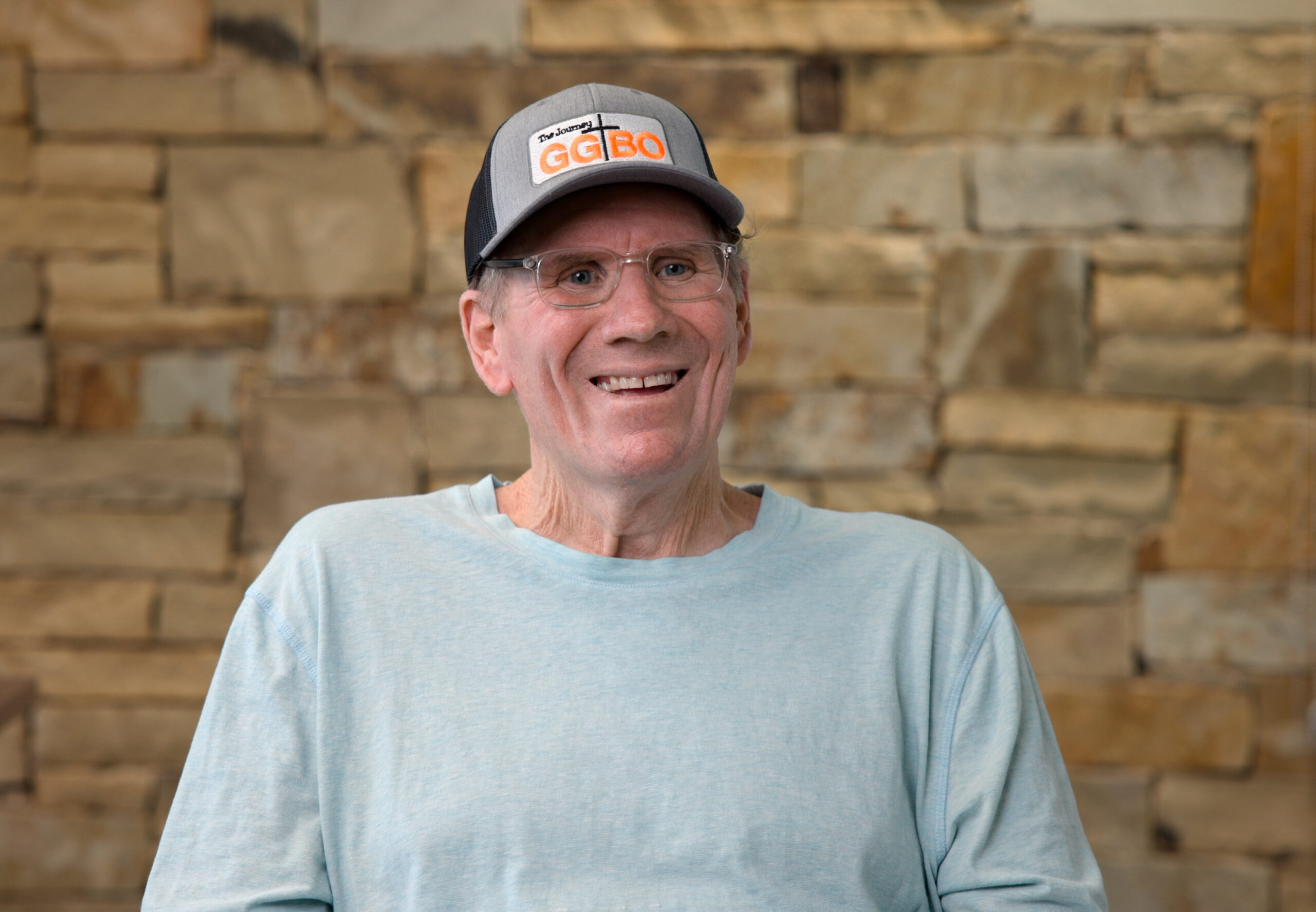
When David Carter arrived at The Rehab Center at Stillwater Medical, he wasn’t walking—and doctors elsewhere had told him he likely never would again. At 57, the Shawnee native, husband, father of three, and proud grandfather of six was facing not only a long recovery from a severe reaction to cancer medication, but also the emotional weight of losing his independence.
Carter had already spent time in multiple rehabilitation facilities, yet instead of improving, he left the programs feeling worse than when he arrived. “I went in moving my feet,” he recalled. “I came out not moving at all.” Doctors there believed walking again was unlikely, and Carter soon found himself back in the hospital, discouraged and running out of options.
That’s when a friend suggested The Rehab Center at Stillwater Medical. From the very beginning, Carter says, the experience felt different. Even before his admission, a staff member met him at the hospital to explain what the program would be like and to answer questions.
Once admitted, the pace was set immediately. “At other places, you check in and kind of lay around,” he said. “Here, they hit the ground running.” Even on his first day—when Carter thought he might ease in slowly—the therapy team was ready to work. It wasn’t always easy, and it didn’t always go as planned, but it was consistent, intentional, and motivating.
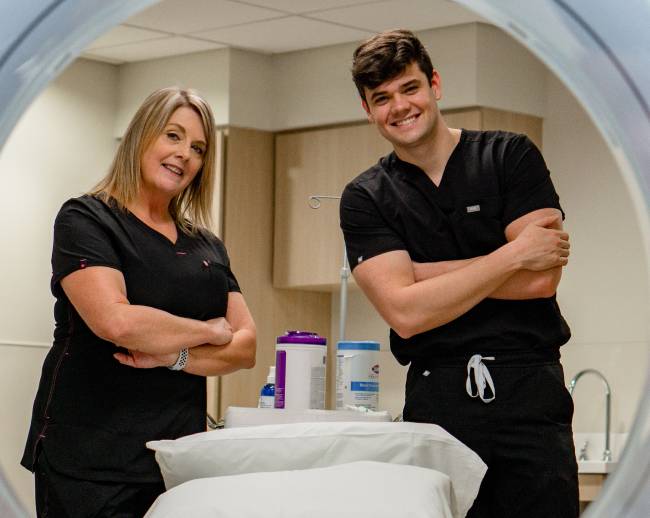
What stood out most to Carter wasn’t just the physical therapy, but the culture. “Every day was something new,” he said. “They kept me motivated. And on the days I didn’t want to do anything, they pushed me—because they believed I could do more.” Physical therapist Kevin Perry and Occupational Therapy Assistant Liberty Wright, along with staff members like Michelle Hawkins and a dedicated nursing team, became a steady source of encouragement. “We laughed, we joked, we worked hard,” Carter said. “It felt like family.”
That sense of family mattered deeply, especially since Carter spent much of his nearly 30-day stay alone. His wife was unable to visit for the first two weeks due to COVID, and he didn’t know anyone else in the facility. Still, staff members made small but meaningful adjustments that left a lasting impression. When they noticed he slept best between 6 and 9 a.m., they coordinated care to let him rest uninterrupted. “No one had ever fought like that for me in a hospital,” Carter said. “That meant a lot.”
Carter left in a wheelchair, but with something he hadn’t had in a long time: hope. Staff never promised he would walk again—but they also never told him he wouldn’t. Instead, they asked what he was willing to put into his recovery and reminded him daily that progress was possible.
That mindset carried him forward. Last January, months after leaving Stillwater, Carter took his first steps. Today, he is walking. He continues therapy and credits his progress to both physical work and mental determination. “There’s more mental to it than physical,” he said. “They showed me that I could do this.”
Carter is also fighting stage four melanoma, a daily battle he approaches with faith and perseverance. He openly shares his belief that hope—spiritual and personal—plays a critical role in healing. Looking back, he describes his time at Stillwater as a pivotal chapter in his life. “Those people are important to me,” he said. “I didn’t feel like I left because I was done—I felt like I just ran out of days.”
Today, Carter recommends The Rehab Center to anyone who asks. “You don’t have to go to a big city to get great care,” he said. “Stillwater is a little jewel.” And for him, it was the place where hope took root—one determined step at a time.