


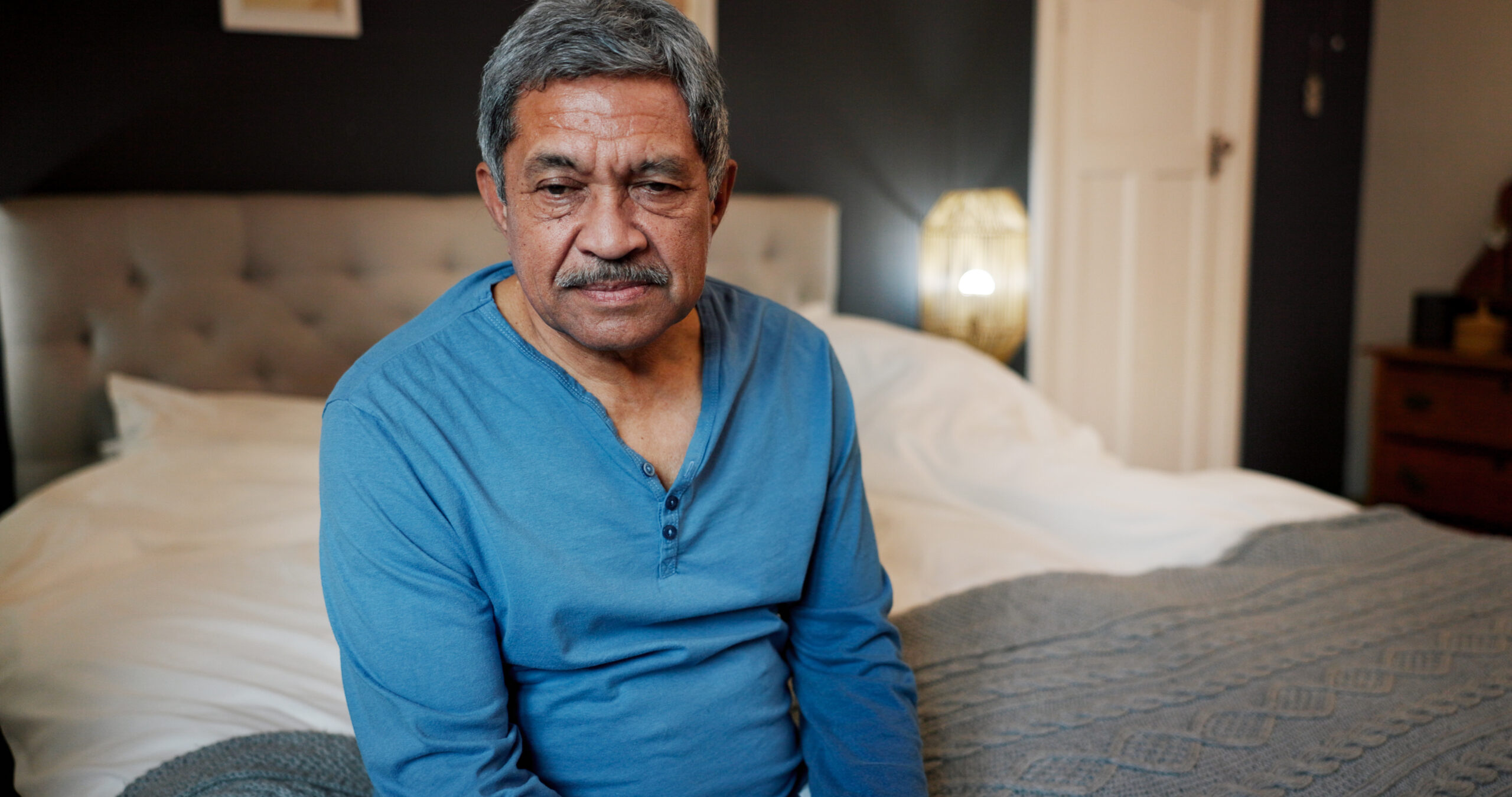
For many adults, poor sleep has become a frustrating routine—snoring that rattles the walls, waking up gasping, morning headaches, or a constant sense of exhaustion no matter how early they turn in. While stress and busy schedules can certainly interfere with rest, physicians say one common and often overlooked cause is sleep apnea.
Sleep apnea is a medical condition in which breathing repeatedly stops and starts during sleep. The most common form, obstructive sleep apnea (OSA), occurs when throat muscles intermittently relax and block the airway. These pauses in breathing can happen dozens—even hundreds—of times a night, often without the sleeper realizing it.
Left untreated, sleep apnea is associated with increased risks of high blood pressure, heart disease, stroke, diabetes and daytime accidents due to fatigue. Yet because symptoms occur during sleep, many people live with the condition for years before seeking evaluation.
Common warning signs include loud, chronic snoring, choking or gasping during sleep, excessive daytime sleepiness, difficulty concentrating, irritability and waking with a dry mouth or headache. Bed partners are often the first to notice a problem.
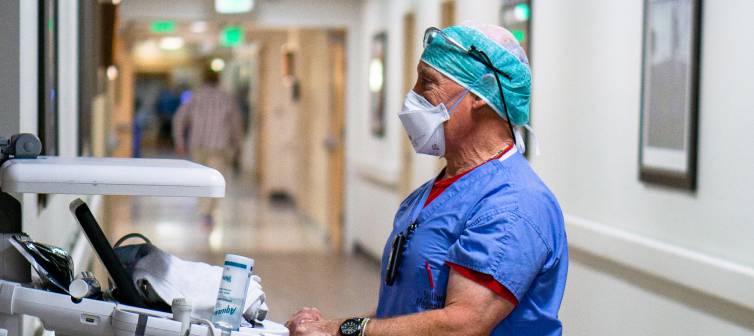
In Stillwater, sleep medicine has been part of the healthcare landscape for more than two decades, thanks in large part to the work of Gilbert Emde, M.D. Dr. Emde began his medical career at Stillwater Medical in 1975 as a college freshman working in the emergency room. After completing medical school at the University of Oklahoma College of Medicine and residency training in Wichita, he returned home in 1985 to open his own internal medicine practice.
In 1999, he became the first patient in Stillwater’s newly established sleep lab. After undergoing a sleep study and beginning treatment with continuous positive airway pressure (CPAP), he experienced dramatic improvement.
“Sleeping with a CPAP, I had the best night’s sleep I’d had in years,” Dr. Emde has said of that experience. “You kind of become a believer at that point.”
That personal turning point evolved into a professional focus. Dr. Emde went on to become board-certified in sleep medicine and helped expand local access to diagnostic sleep studies and treatment—reducing the need for patients to travel outside the community for specialized care. Over the years, he has evaluated and treated patients from across north-central Oklahoma, including Ponca City.
Diagnosis of sleep apnea typically begins with a clinical evaluation and sleep study, either conducted overnight in a sleep lab or through a home sleep test for selected patients. These studies monitor breathing patterns, oxygen levels, heart rate and brain activity to determine whether apneas are occurring and how severe they are.
Treatment depends on the severity and underlying cause. CPAP therapy remains the gold standard for moderate to severe obstructive sleep apnea. The device delivers steady air pressure through a mask, keeping the airway open during sleep. While some patients initially find the equipment unfamiliar, many report improved energy and clearer thinking once they adapt to therapy.
For patients who cannot tolerate CPAP despite appropriate fitting and troubleshooting, other options are available. One alternative is the Inspire upper airway stimulation system, an implanted device approved for certain adults with moderate to severe obstructive sleep apnea. The system works by delivering mild stimulation to the hypoglossal nerve during sleep, helping keep the airway open. Implanted during an outpatient surgical procedure, the device is activated at night using a small remote control. Physicians note that careful evaluation is required to determine whether a patient is a candidate, and not everyone with sleep apnea will qualify.
Additional treatments may include oral appliances fitted by dental specialists, weight management, positional therapy, or, in certain cases, other surgical interventions. Physicians emphasize that untreated sleep apnea rarely improves on its own and tends to worsen with age or weight gain.
Sleep specialists also encourage people not to dismiss persistent fatigue as simply part of getting older.
“Getting to know patients over time and helping ease their illnesses—that’s what matters,” Dr. Emde has said, reflecting on a career that now spans five decades.
That commitment continues as his sleep clinic prepares to move to a new location at 610 S. Walnut in Stillwater. Dr. Emde will begin seeing patients in the new location in March, continuing to provide evaluation and management of sleep disorders in the community he has served for 50 years.
For individuals who suspect sleep apnea, physicians recommend starting with a conversation with a primary care provider. Early diagnosis and treatment not only improve sleep quality but can also reduce long-term health risks.
Restful sleep is not a luxury; it is a foundation of overall health. Recognizing the signs of sleep apnea—and seeking evaluation when symptoms persist—can be a critical first step toward safer nights and more energized days.