
For Rocky Dunnam, food has always been more than a meal—it is a form of care, dignity, and connection. As Director of Nutrition Services at Stillwater Medical, Dunnam is reshaping what hospital food can be by placing people, purpose, and compassion at the center of every plate.
Dunnam’s path to healthcare was anything but traditional. He began college on a pre-law track, but quickly realized his heart was elsewhere. “I would be sitting in class just thinking about getting to my restaurant job at night,” Dunnam said. “One day it hit me—why don’t I just do this full time?” That realization led him to culinary school and eventually into the hospitality world.
It was a deeply personal experience that ultimately redirected his career toward healthcare. When Dunnam’s grandmother became seriously ill and spent time in both a hospital and a nursing home, he saw firsthand how much meals mattered; especially when little else could be controlled. “The food was hospital food. It was average,” he said candidly. “I knew it was doing nothing for her health. But even more than that, mealtime was the one thing she and her friends looked forward to every day. And it wasn’t being done right.”
That experience became Dunnam’s ‘why.’ He recognized hospitals already had the tools, commercial kitchens, and skilled staff, but often lacked a culinary-forward approach. Determined to change that narrative, he moved into healthcare food service with a mission to elevate meals for patients who needed them most.
Originally from the Texas Panhandle, Dunnam felt drawn back to a region where he understood the people and the culture. That sense of home is what eventually brought him to Stillwater Medical. He said, “These are my people. They are kind, genuine, good people. I understand this region and how I can better help this community.”
Since arriving at Stillwater Medical, Dunnam has led meaningful change. One of his most significant accomplishments has been shifting the kitchen toward scratch cooking. “When I got here, we were about 50/50 scratch versus pre-made,” he explained. “Today, we’re closer to 80/20. That’s the biggest improvement, and the biggest health-forward initiative.”
That philosophy extends beyond nutrition into patient experience. Dunnam emphasizes flexibility, personalization, and listening. “Good food for good people—that’s all it is,” he said.
Dunnam credits Stillwater Medical’s culture and leadership for allowing that vision to thrive. He points to a moment early in his tenure that solidified his respect for the organization—one involving CEO Denise Webber. “The very first time I had ever seen Denise, she was standing outside a safety huddle crying with a patient who had just lost a baby,” Dunnam recalled. “She ended up being late to the meeting because she took the time to just be there with them. You don’t see that from CEOs.”
He added that the organization’s emphasis on people is unlike anything he has seen in his 20-year career. “There’s a reason Stillwater Medical is successful, and it starts at the top.”
Looking ahead, Dunnam is excited about upcoming improvements that will further enhance patient care. A new patient dining software system, HealthTouch, will soon allow staff to take meal orders directly at the bedside using iPads, creating a restaurant-style experience that is more personal and accurate. “We’re coming to the patient, walking them through the menu, and starting the meal as soon as the order is placed,” he said. “It’s going to be a game changer.”
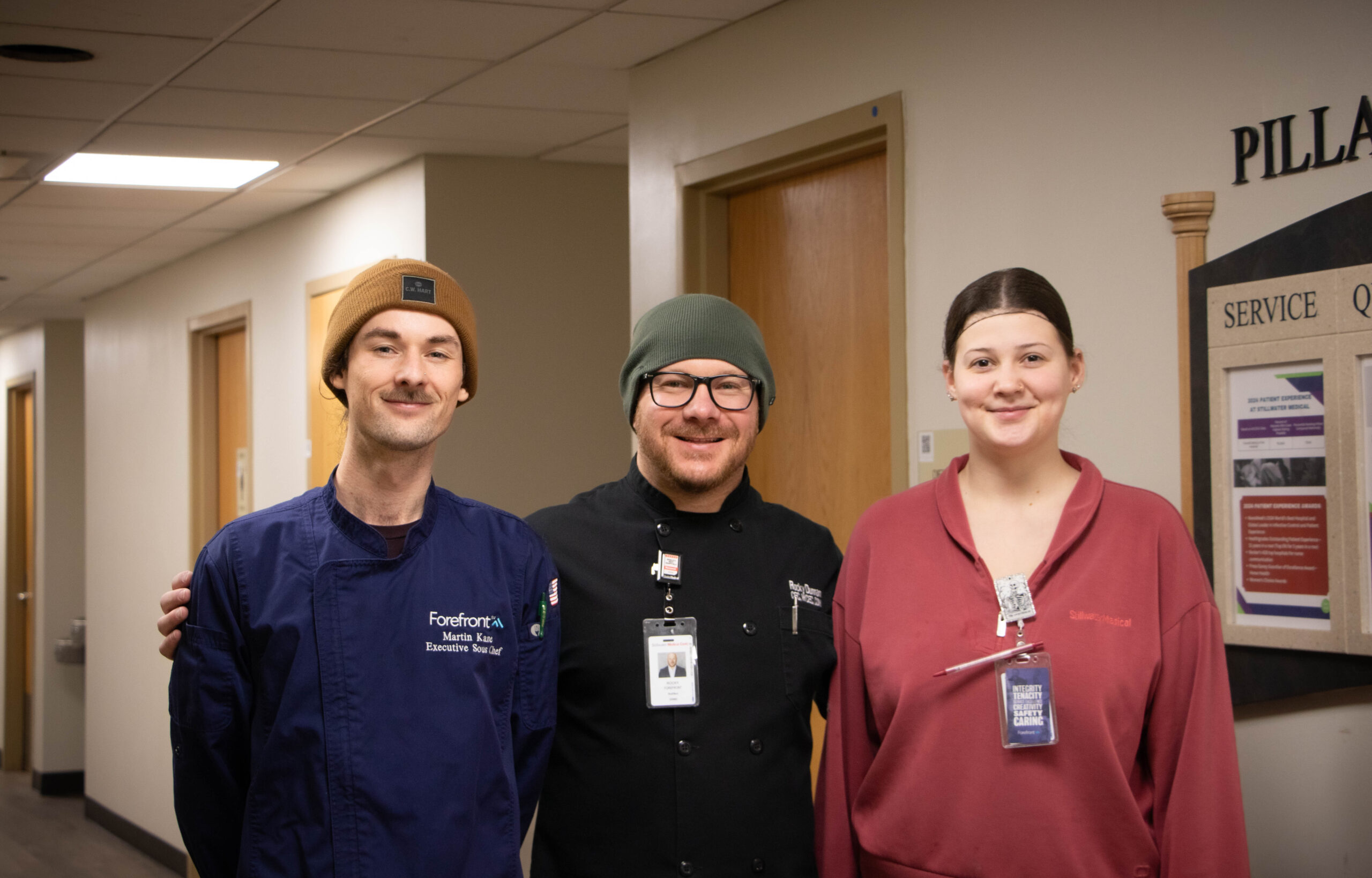
Equally important to Dunnam is developing his team. He takes pride in mentoring staff and promoting from within, recently celebrating the promotion of a longtime employee to Executive Sous Chef. “Seeing my people grow and succeed, that’s the most rewarding part of the job,” he said.
At its core, Dunnam’s work is about restoring dignity through food. It is a promise he made long ago, to his grandmother, to patients, and to himself. And at Stillwater Medical, that promise is being fulfilled one meal at a time.